Designing a memorial service can be a tricky thing in today’s modern world of funerals and memorial products. The options can often seem limitless – to the point of becoming overwhelming –to family and friends of a person who has died. And, since memorial death care industry statistics typically show that the average person is involved in planning less than three funerals or memorials in an entire lifetime, most people do not have much experience in this department. That fact makes the job just a little harder.

Because consumer advocates who follow and specialize in issues related to memorial products and funerals typically advise clients of funeral homes, crematories and even cemeteries to be wary of subtle sales pitches that can dupe them into spending far more for their loved one’s memorial service than they would have liked (or can afford), we offer these tips that can help you to design exactly the funeral service that your family or (more importantly, your loved one) had intended at a price you are ready and willing to pay.
Who Should Design a Memorial Service
The first thing to remember in this discussion is simple: do not let a “professional” in the memorial service industry plan the memorial service. Simply put, this means, do not ask a funeral director what he or she recommends for a loved one’s funeral. Consumers should be ready to design the memorial service for themselves.
The answer to our question above, who design a memorial service is this: the family should design it. And, as they do so, they should remember that the professionals they work with work for them, not vice versa. Even a seemingly innocuous question to a funeral director such as, “what are the traditional elements of a funeral,” can lead to a long series of subtly applied sales pitches that are cleverly designed to convince families that the key to a good memorial service is to spend as much as possible on “only the best” products and services. Funeral directors and cemetery sales people spend a lot of time, unbeknownst to their clients, studying sales approaches that “work” – in other words, the approaches that play sufficiently upon the stress and grief that everyone naturally feels at the time of a loss of a loved one to convince the family to buy more goods and services than is in their original plan. In fact, funeral industry love families who come to them with no plan.
Getting Exactly What You Want from a Memorial Service
As you might expect, our advice for getting exactly what you want from a memorial service involves sticking to a plan.
But, for many families, it is much more involved than that: sticking to a plan, after all, requires that a plan be present in the first place. So, the first step in getting what you want from a memorial service is to establish a plan. That can be easy if the deceased has already done the work on that. And, for a friend or relative who is in his or her later years of life, the chances are strong that a plan has been at least partially established. Consumer activists strongly require that families do a thorough search of their loved one’s papers, safety deposit boxes, private notebooks, lawyer’s offices and other such locations to find any evidence of a plan. They should also consult one another very carefully to determine if any verbal instructions may have been left behind. Once armed with whatever information they can round up families will be well equipped to make a plan.
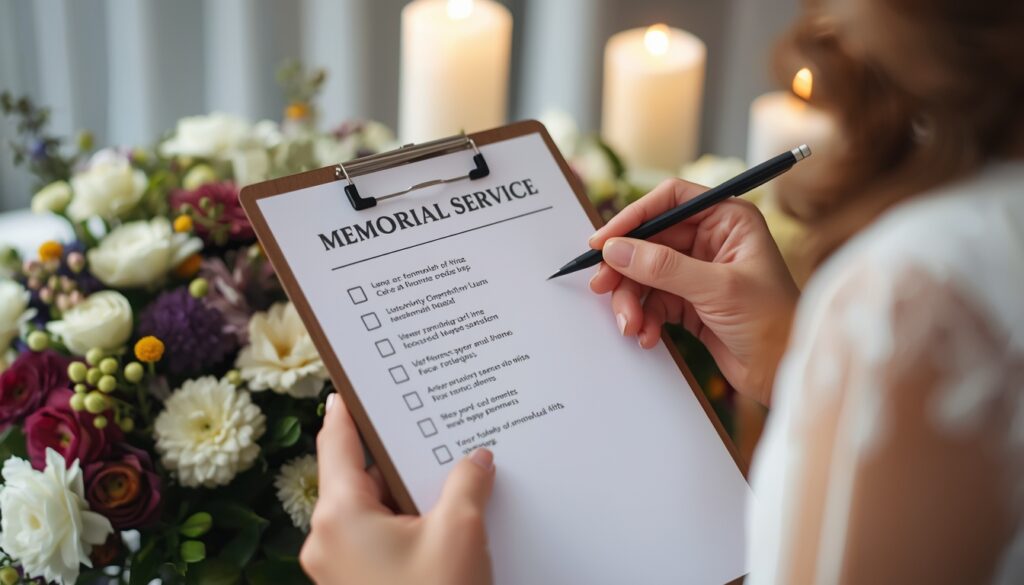
At this point, family leaders should be ready to call a gathering of everyone who may be interested in how the funeral service for the loved one will be run. And everyone should be ready for this meeting to last for hours if need be. Planning the funeral service should be as much a time of sharing stories, and working through grief over the loss, as it is a business meeting, but, in the end, the family should come to a consensus about just who will speak for the group in its dealings with a funeral director and, probably more importantly, what that person will require of the funeral home. For families looking to create a more personal tribute, exploring ideas like Pet Memorials For Gardens: 14 Ideas can inspire unique and meaningful ways to honor a loved one’s memory.
Armed with anything less than a well conceived, well researched plan for what a memorial service will look and feel like, a family is at risk of spending much more than they should on the service, and there is strong likelihood of a very bad case of buyer’s remorse coming about in the weeks and months after the funeral.
Reliable Help in Getting What You Want from a Memorial Service
But even a well-crafted plan for a memorial service may not always be sufficient. Families may need plenty of help as they arrange to carry out their plan. And fortunately, plenty of help is usually readily available. Most states in the United States have funeral consumer’s groups whose telephone lines and websites are manned by volunteers available to answer questions about how to get exactly what one needs from a funeral home or cemetery. In many cases, these groups are run by people who were lured to the subject of memorial service planning after being sold too much by a crafty funeral director or cemetery salesman who they encountered upon the unexpected death of a loved one. These people have generally “seen it all” when it comes to questionable sales approaches that some funeral homes encourage in their staff, and they can generally recommend good counter approaches. Even in cases in which doing business with a competitor is not a viable option, these groups of volunteers can be of tremendous support and help. And they are generally very easy to find by simply typing words like “funeral consumer activist groups” into just about any search engine.