
The staff positions of a funeral home depends upon the number of memorial services it arranges in a typical month. Many small funeral homes conduct just a handful of funerals each month (often fewer than 10) and therefore play hosts to staffs of as few as two or three people, all of whom end up doing just about everything. Larger funeral homes will conduct dozens of funerals each month and therefore require more people to specialize in specific areas such as bookkeeping, hosting of families, arranging of transportation, and working with churches and cemeteries.
To simplify our discussion of funeral home staff, we simply offer the following list of duties that a typical funeral director is expected to perform for any funeral. In some cases, the funeral director will do all of this work his or her self, but in others, he or she will delegate at least some of these jobs to others on the funeral home staff.
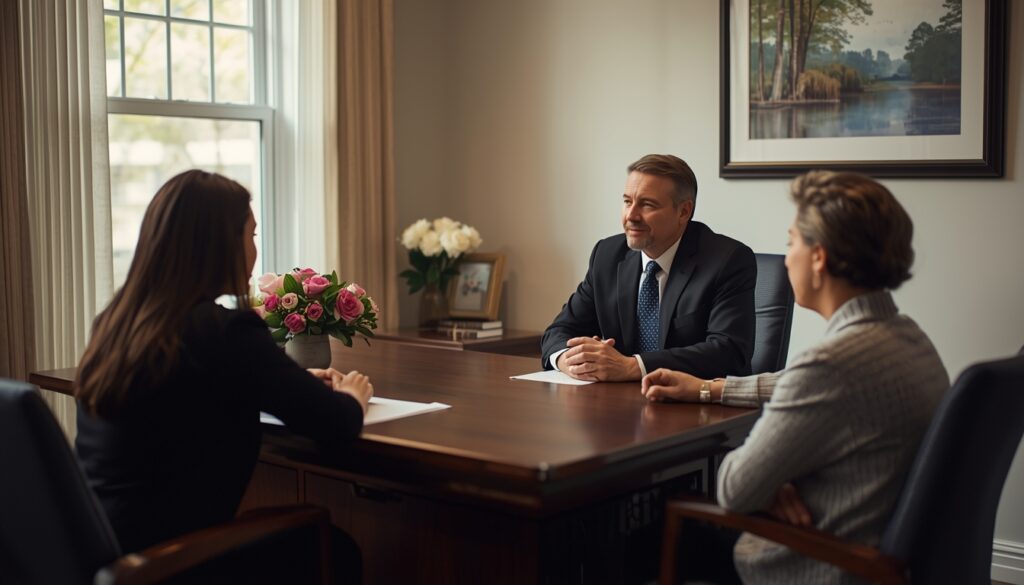
Coordinating with family members – One of the first things a funeral director must do is meet with a family to begin planning a funeral. This first meeting usually happens in the funeral director’s office, but, many times funeral directors are called to travel to a family’s home to meet with members who are physically unable – or perhaps too emotionally distraught – to travel to the home. During the initial meeting, the funeral director must determine which family members are the decision makers and set forth on a healthy pathway toward consensus in all decisions that must be made. This often requires the calm demeanor of a psychologist or even a diplomat.
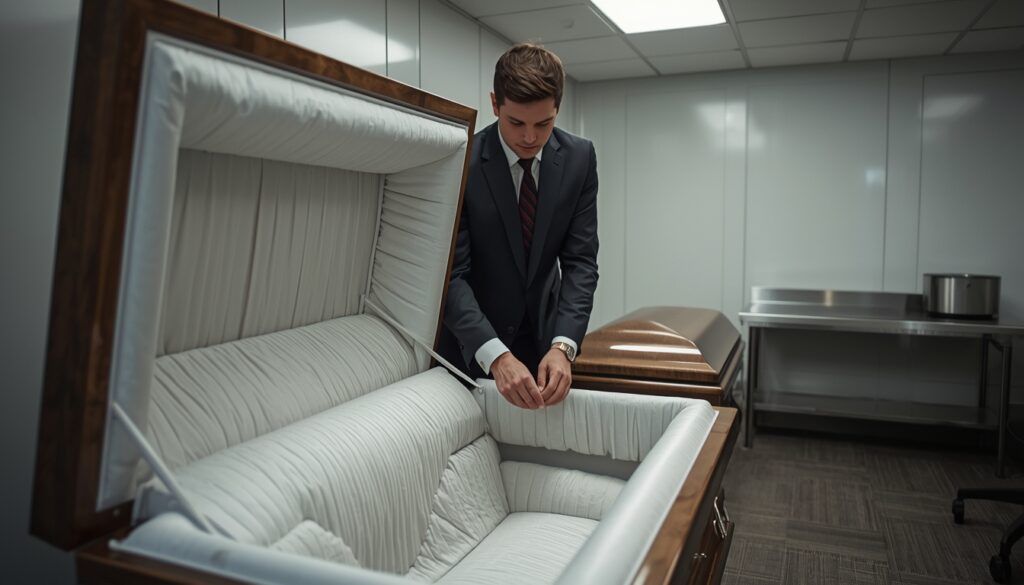
Caring for a body – In many cases, a funeral director’s first involvement in a funeral comes during a phone call from a hospital or nursing facility where a person has passed away. The staff at the facility will call the home and request that a funeral director take possession of a body. The funeral director must then begin securing proper legal authority to act in this case and begin determining what services – embalming, cremation, etc – will be requested. In these matters, the funeral director needs to be familiar with legal issues and must know how to be a caring, compassionate consultant for a family.
Publicizing the funeral – Once plans for a funeral have been established, a funeral director must begin the job of publicizing the service. This almost always involves the preparing and publishing of an obituary and sometimes it requires the circulating of announcements to local establishments and posting the notice of the funeral on websites and social media outlets. In the case of funerals of high-profile citizens, publicizing a funeral may also mean coordinating with local media and, perhaps, even playing host to a press conference about the funeral.
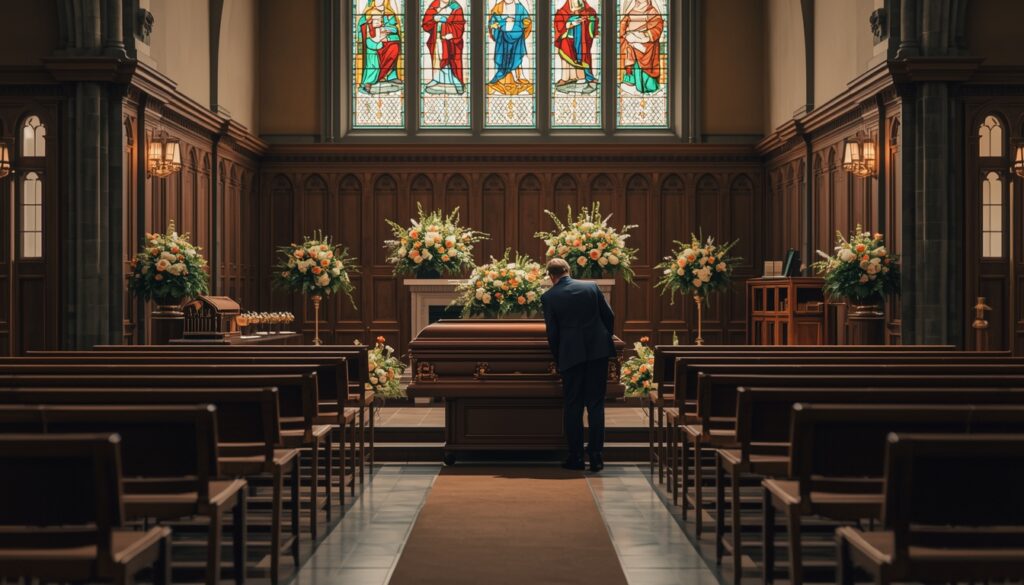
Working with churches – Most funeral homes maintain a chapel in which memorial services are commonly held, but many families choose to host the service in some other location. In these later situations, the funeral director is called upon to coordinate the arrangements with the church or whatever other host facility the family chooses. Even in cases in which the family has elected to hold the service in the funeral home’s chapel, the funeral director must usually work with a church or other organization to arrange for a clergy to officiate the service and, perhaps, to recruit speakers to deliver a eulogy or other presentations at a service.
Arranging details of a service – Arranging for clergy and other speakers at a funeral is just the beginning of a myriad of details that a funeral director is expected to attend to for a memorial service. The director must order (or assist the family in ordering) a casket or cremation urn, attend to music selections, arrange for transportation of the funeral party to the burial ceremony, organize the burial ceremony, assist out-of-town family members who will be traveling to the area, field questions from family and the public about funeral arrangements, greet family and friends at the visitation ceremonies, and work with florists to assure that orders are placed and deliveries are made in a timely fashion. And any director will tell you that’s just the start.
Funeral homes are often criticized for charging large fees for their services, and good consumers are smart to be on the look-out for unjustified charges. If you’re planning ahead or comparing services, you may also want to read How Much Does A Funeral Cost? to better understand typical pricing and what factors affect the total expense. But, all-in-all, there is a great deal of work that goes in to organizing and hosting a memorable and helpful memorial service. And it’s good to know that funeral home staff – led by a funeral director – can be counted upon to take care of these details in an efficient and seemless fashion.