
Many large cemeteries today have signs out front of their main offices that proudly reserve some of the best parking spots on the property for “Clergy Parking Only.” Clearly, these signs are an indication that the men and women who run the churches of the United States (and, for that matter, the world) are an integral part of today’s funeral home and cemetery businesses. Just as pastors, rabbis, and other leaders of faith are in demand at hospitals during times of crisis, so too, do they play an important role in the next phase of the transition that everyone makes from life on earth to the hereafter. And, though not all members of the clergy will agree to officiate the proceedings of a memorial ceremony for no charge, many do certainly share of such work. Nevertheless, the role of clergy in today’s funerals is often misunderstood. The pastor who agrees to take charge of a funeral service is typically the formal leader, for example. This is different from the assumption made by many people that the funeral director who works for the funeral home that has been employed by the family of this deceased is the one who calls the shots, officially, for the service. But that is not actually the case. Rather, it is the funeral director who works on behalf of the clergyman or clergywoman chosen by the family to make sure the service runs according to the most relevant religious and spiritual traditions. Funeral directors, who work with families of many different faiths as a matter of professional practice, are trained to follow the cues established by clergy as they go about the funeral service preparations. So, this article gives an important overview of the all-important role that clergy have in the burial and funeral ceremonies planned and hosted by a family.
Counseling
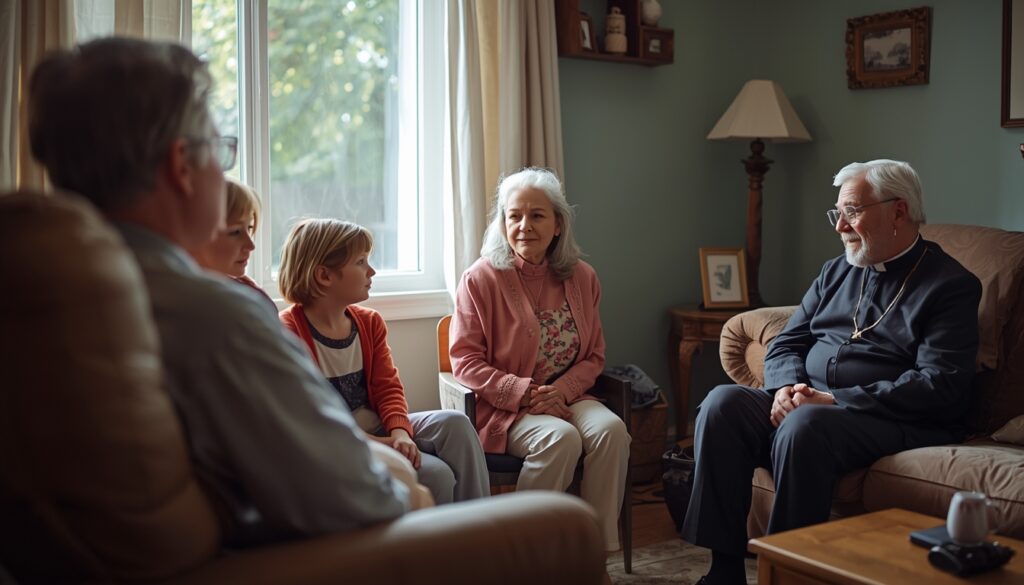
The most important role that clergy have in serving the family of a deceased family member is counseling. Typically speaking, a family meeting with the clergy who have been chosen to lead the funeral and burial service is the first step organizing a memorial. These initial meetings often resemble counseling sessions as much as they do planning meetings. In these gatherings, the pastor will typically ask all family members present to spend a few moments talking about the life of the deceased, and the clergy member will simply take notes, being very careful to not pass judgment on any of the family’s commentary or to offer opinions that might lead to more emotional turbulence than is already to be expected at the loss of a loved one. It is during this time that the pastor will begin his quiet plans for the sermon that he or she will typically deliver at the funeral service. A good sermon, many pastors have testified, is one that serves as the counselor’s culminating thoughts that come about after an initial session with his or her “patient.” In the sermon, the pastor will guide his charges to a place of hope and encouragement based on the stories he has heard about the life of the deceased. This is exactly the job that a professional counselor must usually accomplish, too, during his or her first few meetings with a person (or family) that comes to him or her for help.
Planning
After the framework for the funeral sermon has been formed during the first, counseling, session with a grieving family, the clergy who has been chosen to lead the funeral service and burial will go to work at planning the services. These plans almost always will follow the traditions and rituals that are part of the man or woman’s own faith, but they must also take into consideration the needs that are important to the family. For those following specific religious traditions, such as Catholic rites, understanding How To Plan A Catholic Funeral can help guide the process with clarity and confidence. This can be a tricky proposition because it is not always the case that a family’s secular needs are in alignment with the spiritual needs that the clergy representative is obligated to make his or her first priority. Further, there is the practical matter of working out logistics with the funeral director who has been chosen by the family. This is why many funeral homes and cemeteries are sure to reserve a spot in their parking lots for clergy. Any family who organizes a funeral service can expect the funeral director and the clergy to spend plenty of time meeting together. Often, because of the hectic pace of daily lives, these meetings are done via telephone and/or email, but it is still often very necessary for the clergy and funeral director to communicate directly, in person, in many cases as well. It is often the case that disagreements may arise between the vision that a funeral director may have, based on his or her professional experience, for the way a funeral service should be conducted and the plans that a pastor may have outlined for the service. In such cases, it is the professional responsibility and duty of the funeral director to defer all opinions to the pastor. In no instance should a professional funeral director attempt to undermine the leadership authority of the clergyman or woman the family has chosen for the memorial service plans. It is sometimes the case that families will disagree with a clergy’s plans and will ask a funeral director to intervene to change the plans in accordance with their wishes. This is an ethically sticky situation for a funeral director, but it is all-too-common as well. How the funeral director handles the request will be different for just about every unique situation, but, in the end, a funeral director will almost always be true to his or her responsibilities by simply encouraging a family to follow the advice and direction provided by the clergy they have chosen.
Maintaining Decorum
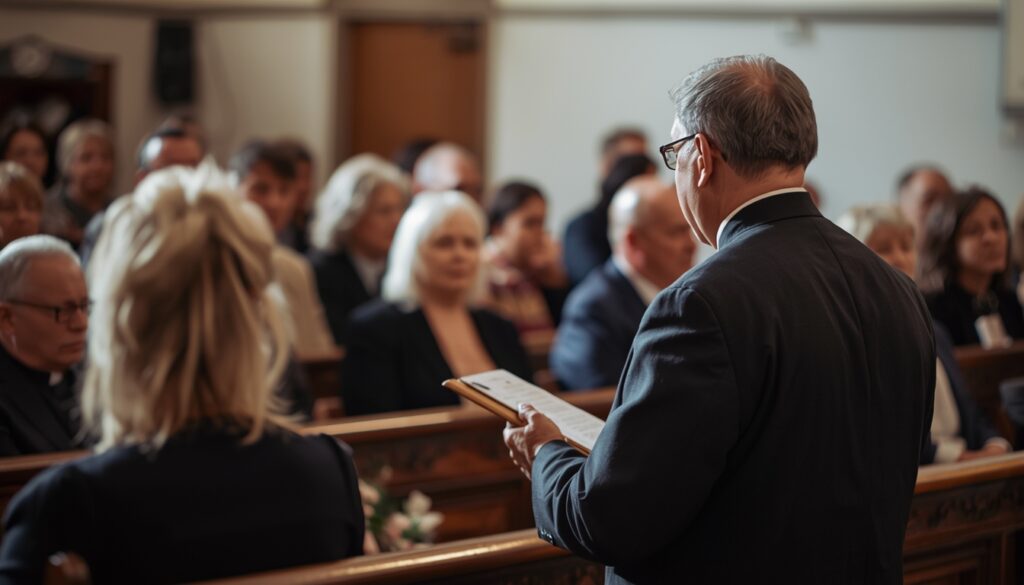
The final role that clergy have in any funeral and burial service is simply maintaining the decorum of the event, enforcing the integrity of the traditions that he or she has adopted allegiance too and is required to teach to others as part of his or her responsibilities to the church for which he works. This can be a tricky job, just as with every aspect of the roles a clergy plays in the funeral planning. But, nevertheless, skilled and prayerful members of the clergy of just about any religious congregation have thoroughly studied and practiced their duties in such situations well in advance of their taking command of the jobs they have been assigned as part of their ministries. So, tricky is not usually a problem for these men and women of God.