
Technology has changed the world in an amazing number of ways since the middle of the 20th Century, and the world of funerals has not escaped its influence. Funeral technology is making memorializing a loved one easier – and more permanent – than ever. Here is a brief guide to some of the things technology has brought to funerals in recent years.
Probably the most obvious technological feature of funerals is one that is now standard fare in almost every funeral – even the most simple and inexpensive: the video tributes. Many funeral homes today now include a video tribute as part of their basic service. Family members simply gather old photographs of the deceased – whether they be traditional pictures or digital images – and submit them to a funeral home staff member. Just a few hours later in many cases, the images return on a computer disk edited as a montage – often complete with music and captions – that is played on a loop throughout the visitation period when family and friends stop by the funeral home to pay their last respects.
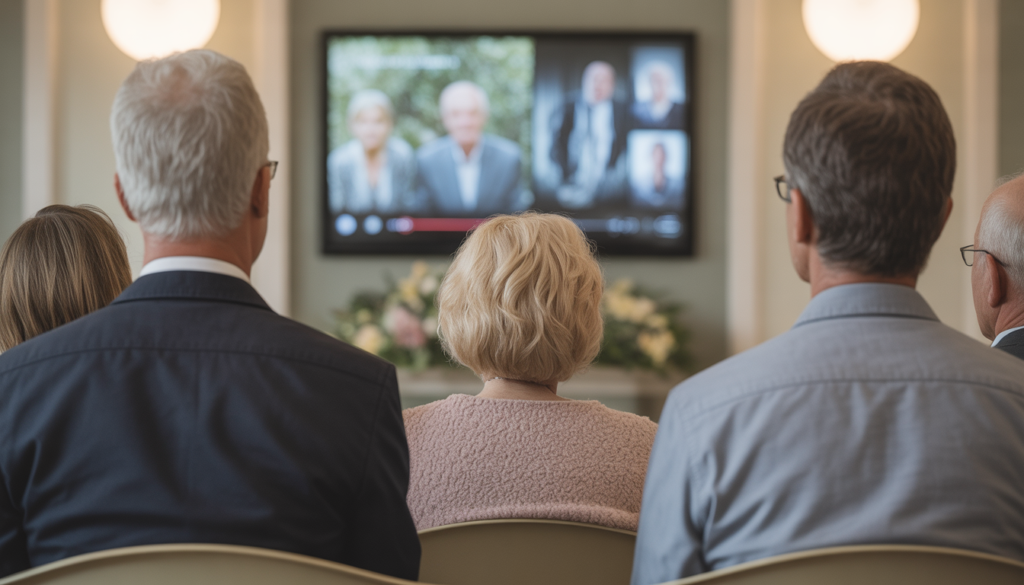
The next technological feature developed from video tributes. Families wanting to find a way to make the tributes permanently and easily available via the internet, led to the development of memorial websites. These places on the internet are not quite as ubiquitous as video tributes, but they are becoming increasingly more common with every year. Most memorial websites established by funeral homes use technology to feature the video tribute, but there are usually other memorial features on these sites as well. Online comment sections, for example, are common parts of memorial websites, giving family and friends the opportunity to log on, say, on important anniversaries to post memorial comments about their loved one to accompany the video tribute.

And memorial websites have spawned one of the latest parts of funeral home technology: funeral webcasting. Today’s modern technology gives funeral homes the ability to turn themselves into miniature recording and broadcast studios, capable of very professional productions. Funerals are now captured on digital video recording very routinely, and some of these events are broadcast live to the world via the funeral home’s website. This is particularly a well-loved use of funeral home technology in cases in which a well known personality has died and has close friends and relatives scattered across the world. These people can now “attend” the funeral service – even posting real-time comments that can be viewed by others during the service – from just about anywhere in the world. While not all funerals are broadcast live on the internet an increasing number are made available on the deceased’s memorial website for viewing across the world at just about any time.
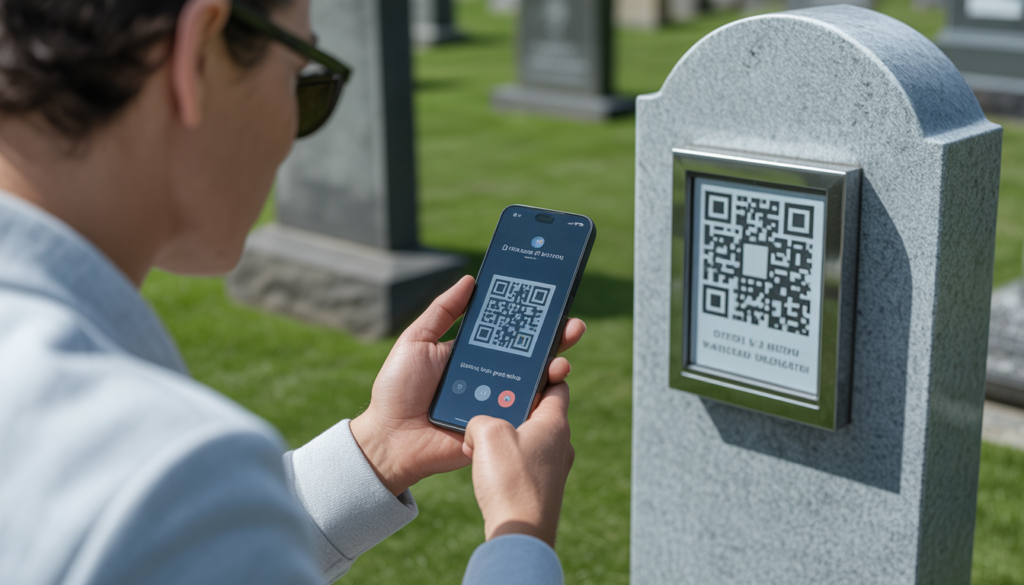
Finally, one of the most funeral home technology advances that experts seem most excited about is gravestone technology. Today’s smart phone technology has advanced to the point that gravestones can now be embedded with a chip that stores a wide variety of digital information about the deceased whose graves they mark. Visitors to the cemetery can simply touch their cell phone to the grave marker, and instantly begin viewing the video presentation, which can include just about anything that the imagination allows. Users can scroll through writings done by the deceased, watch home movies submitted by family members and, again, even leave messages to tell the world that they have visited that particular site. This technological advent has profound potential for the future historians and sociologists of the world. No longer will future generations be left simply with names and dates by which to know their ancestors. Now they can have access to hours worth of biographical, and even artistic, information, simply with the touch of a button on their cell phones.
While the basics of funerals have not changed significantly through the decades – visitation, eulogies, pall bearers and pastoral sermons will probably always be a part of funerals – technology has made memorializing a loved one significantly more meaningful than it was in previous years. For those organizing a service, How To Plan A Funeral: A Step-By-Step Guide To Planning A Funeral offers a clear guide to every stage of the process. This should be a comforting thought to all who are interested in preserving their own legacy and maintaining the one’s established by their loved ones who have passed before them.