
For at least as long as mankind has recorded history, he has also been concerned with the respect and disposition of his deceased. In fact, there is much evidence that funerals predate recorded history by centuries. It is clear that the proper remembrance of the dead is a universal concern that transcends the ages. Determining the reasons for this infatuation is a question best left for sociologists, psychologists and anthropologists to discuss. And while they debate that matter, it may be helpful to consider the history of funerals themselves. Here is a brief overview of that topic, which we hope may be of at least some interests to those other fields.
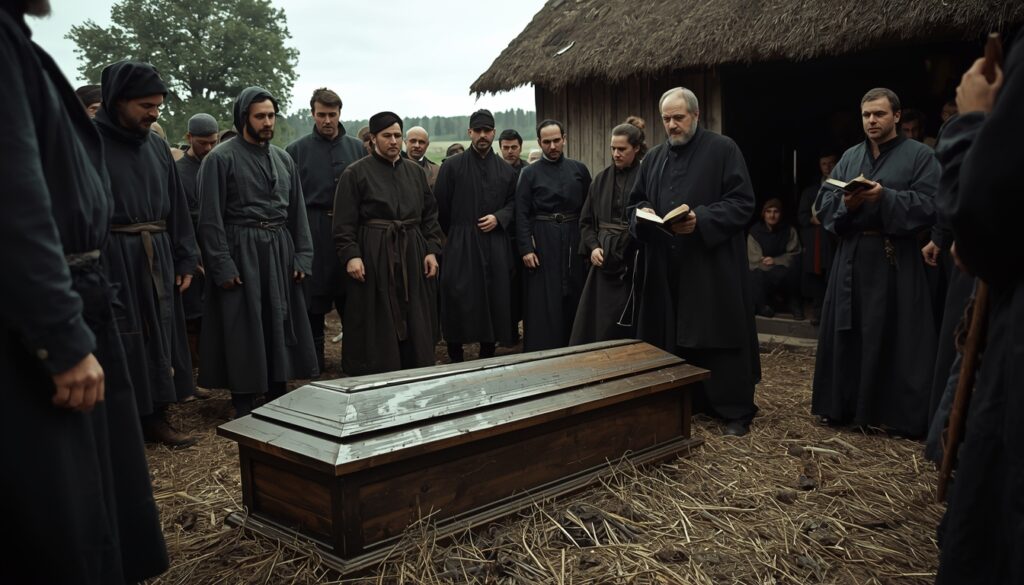
Age of Questionable Practices
The early age of mankind is filled with stories of questionable, even cruel, practices for disposing and honoring the dead. In one bit of unfortunate history (which still does, surprisingly, have a few followers today) we see that in some ancient cultures, the cremation of a deceased man was often accompanied by that of his wife – without concern for whether she was still alive! And still other cultures have been known to toss orphaned children into the grave – alive! – of their beloved mother who has left them for the Great Beyond.
Many cultures in what we have decided to term The Age of Questionable Practices, also had no trouble forgoing any funeral rite for the poorest of their world. Deceased were often simply left in a street (or even in a home) to rot unceremoniously and serve as food for the wildlife that happened by. And still other cultures of ancient years took to burying their deceased – albiet usually with some ceremony – underneath the very dirt floors of the home in which they lived. Scholars argue these days over whether the modern standard of 6 feet graves was adhered to in that time, but it seems that might have been a requirement worth enforcing in such a case.
Rise of Modern Funeral Practices
Objection to these (and many other) horrible practices gradually lead to the evolution of modern funeral practices that have been around, essentially, for 300 years or so. Proper burial in a cemetery filled with graves of many others – and usually well marked for posterity sake – has been the norm of burial since even the days before North America was thoroughly colonized. To go along with this burial tradition, modern men have developed the many funeral traditions that are now a routine part of the modern “funeral home” industry. These include an elaborate preparation of a body for a “viewing,” a formal funeral ceremony highlighted by eulogies from family members and a sermon by a member of clergy, and, finally, a burial ceremony performed at the grave site itself just before a burial.
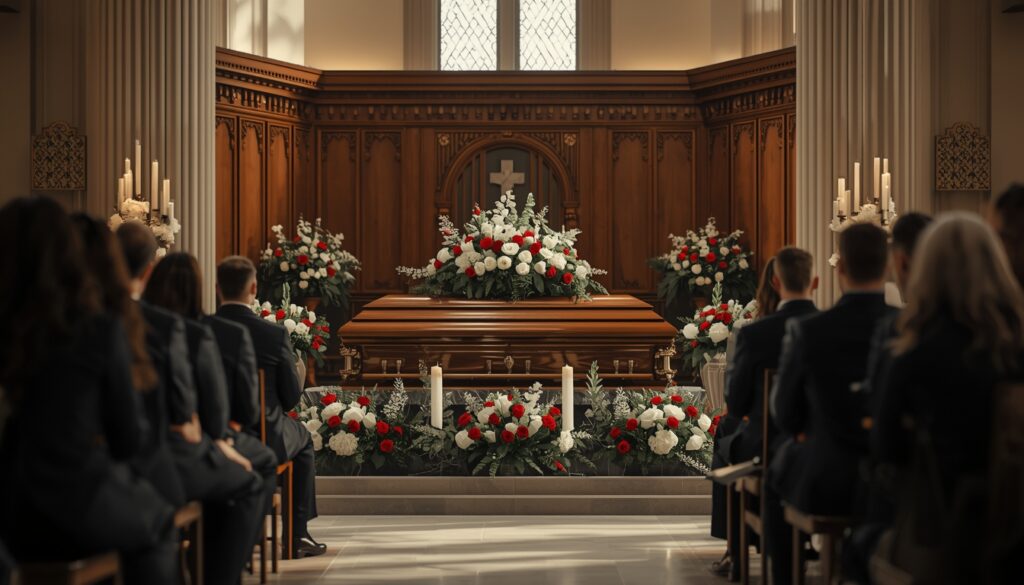
These modern practices have changed in minor ways since their inception in the earliest years of the British Empire, but, their general theme and tone has remained consistent. Funerals remain today a deeply somber, and emotional affair in which loved ones work through their grief over the loss of a family member or friend by remembering the sophisticated, almost stodgy, side of a personality. Seriousness is of the essence in many a modern funeral (all of this is gradually changing as we will soon see), and dark clothes are a must for mourners and deceased alike. The only color that is typically acceptable in a modern funeral is that of flowers that many mourners will bring to the ceremony to drape upon a casket. (It is worth noting that the word casket has largely replaced “coffin” since about the middle of the 20th century when marketing professionals in the funeral industry thought it wise to begin selling the image of a deceased’s body as a “precious jewel” that should be protected for the ages in a sophisticated, elaborately designed case, called, of course, a casket.)
The addition of religion is vital to the modern funeral ceremony because, in most cases, the event is viewed as a means to properly send a beloved soul to heaven. It is worth noting that The Bible (and holy books used by other religions) does not specifically prescribe a ritual for the deceased – nor is one even explicitly encouraged. The advent of the modern funeral is purely a result of mankind’s cultural traditions that have come of ages through the centuries. And, as such, this topic does indeed make a fine topic for study in the realms of sociology, anthropology and even psychology.
Age of Funeral Consumers
It seems unlikely that, though the modern funeral as described in our previous section is still quite prevalent, it will remain intact as a cultural institution for more than a few more decades. The Age of Funeral Consumers is, indeed, upon us and the look of a “typical” is gradually changing.
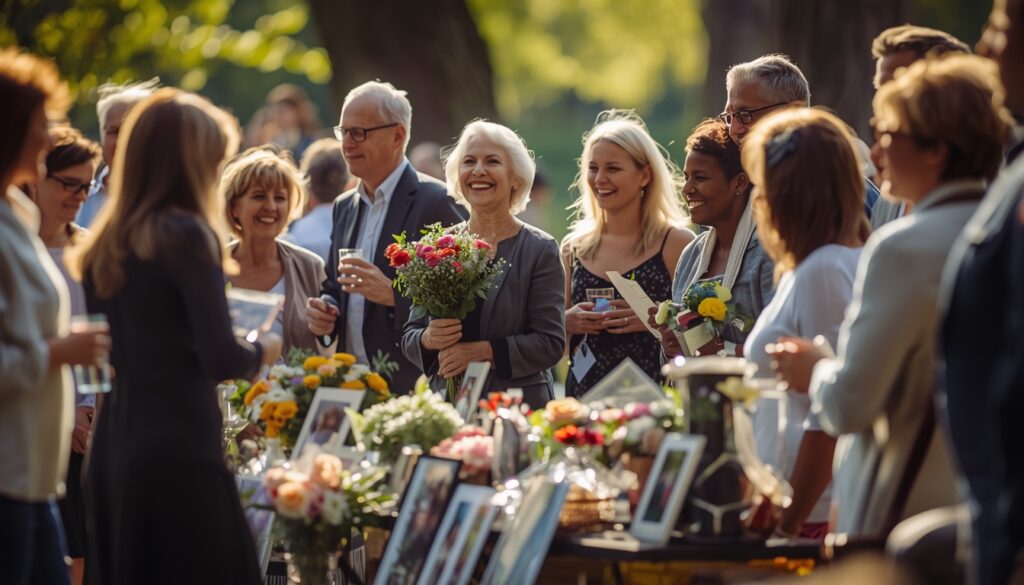
Today’s post-modern funerals are less formal than those of 50 years ago. Blue jeans are generally acceptable. Clergy is not always invited. Simple caskets are acceptable. Rock music is sometimes even a key feature, and laughs and smiles are definitely welcome. In fact, many people today have a distaste for the very word “funeral.” Memorial ceremonies today will often be billed as “celebrations of life.” Families interested in more personalized approaches may want to explore Alternatives to Traditional Funerals.
All of this change is inspired by free market forces that have brought funerals away from the stodgy, traditional, formal affairs of yesteryear and applied a modern, freestyle touch. The public, not the church, is not in charge of what happens at a funeral, and, for the most part that means less rigidity.
To be sure, very formal traditional funerals are still quite common today, and they will most certainly be a tradition for many years to come. But change from them appears to be inevitable. The memorial ceremonies of the future will, perhaps, be a shocking experience for those accustomed to the style of yesteryear. But they will be a product of what the public wants. It will be The People who decide the future of funerals in our world.