
Body:
The importance of funerals to the understanding of a culture cannot be underestimated from a cultural and anthropological point of view. This is why historians and other social scientists devote a significant amount of their energy and resources to studying funeral traditions. In the case of the Jewish culture, funeral traditions have been much slower to change than other aspects of Jewish life, so, in many ways, they make for an excellent cultural time capsule by which anyone interested – regardless of whether he or she is Jewish – can investigate the rich and spiritually significant Jewish culture. We offer this article as part of our continuing series that looks at the way various cultures of the world (both past and present) commemorate the lives of their dead through funerals. As we will see, this study will do much more than enlighten us about how Jewish people understand death: it will reveal, in many ways, their entire approach to life itself.
The Importance of Rules in Jewish Tradition
The Jewish Bible – also known as The Old Testament to those of the Christian Faith – is filled with a great deal of very specific rules, all of which related in one way or another, to The Ten Commandments, by which God asks people to order their lives. Living within these rules is considered the only way to eternal salvation for those who follow the Jewish faith. So it should come as no surprise that Jewish Funeral Traditions are filled with rules established by leaders of the faith. (They are, of course, inspired by God, but, for practical purposes, they must be established Rabbis and other leaders since they are not set for specifically in The Bible, a book written long before the advent of things such as the modern automobile, electronic speakers, and even 20th century cremation procedures. Keeping God’s rules relevant to the changing times brought about by humanity’s practices – not necessarily inspired by God – is a constant challenge for Judaism.)
The adherence to strict rules that can often seem to conflict with one another is probably the most important difference between the Jewish faith and other modern religions. This is, in fact, the long-held source of debate between Jews and Christians, dating back to the founding of the Christianity, a church started by Jesus who taught the still-controversial lesson that literal adherence to rules is not as important as being open to God’s grace in whatever form that it may take. And this difference can be seen perhaps no where more dramatically than in the implementation of funeral traditions of the Jewish culture. We next move into a brief discussion of these traditions that are common only to those of the Jewish faith – and we note that many in the faith have even begun to deviate from them somewhat in recent years. In general, a lessening of strict adherence to religious rules seems to have been the gradual pattern for almost all of the history of the Jewish people. This is not necessarily considered to be a welcome development for leaders of the faith, but it is, undeniably, an accurate assessment of reality.
What the Rules Are
Just as with The Bible’s rules on about all aspects of human life, the Jewish rules regarding funeral traditions are numerous and complex. Far too complicated, in fact, for the scope of this article. It is true that many Jewish scholars have devoted their entire lives to understanding and teaching the rules on just this one very specific part of human life. So, a thorough discussion of these rules would require volumes of words. We trust you, the reader, will forgive us for attempting but a very brief treatment of this topic. For those who desire or require more information on Jewish Funeral Rules, just about any Rabbi at any Jewish Synagogue will be able to direct you to a library of books and documents that will prove very helpful on the topic. For readers interested in exploring other modern approaches to memorial services, you may also find Alternatives to Traditional Funerals helpful.
People involved with a traditional Jewish funeral are given very specific roles from the very beginning. The first is known as a Shomer. These people (known collectively as the Shomereim) serve, basically, as watchmen over a body. They are assigned to watch over the deceased person’s body from the time of death until burial. It is mostly out of deference to the needs of this group of people – who are called to put a halt to all over activities in their lives as they serve as a Shomer – that Jewish tradition requires that burial take place as quickly as possible after a death. Traditionally, it was practice that a burial had to be completed within 72 hours of a death, and, while that still remains the goal, it has become somewhat less strict of a requirement in more modern times. This is mostly a function of the busy lives that all people – Jewish or otherwise – lead. “Shifting gears” to arrange for a funeral is simply a very complicated matter for many people in our increasingly busy and distracted world. While it is certain that there has been much debate among Jewish scholars over this change, this is one area in which matters of practicality, have infiltrated the enforcement of traditional rules and procedures for Jewish funerals. Nevertheless, as we say, in an effort to allow those selected to be members of the Shomereim to return to their regular routines of business and family as quickly as possible, Jewish burials typically do not require a lengthy time to plan and organize. Shomereim are usually selected by the immediate family of the deceased, but immediate family are typically not included in their number. They are usually comprised of friends and distant relatives, often people who are active in the same Synagogue as the deceased. There is no formal Jewish traditional requirement that these people be of the Jewish faith, though, for practical reasons, they most often are.
The other important role that those involved with a Jewish funeral play is that of the Onen. This group of people is usually comprised of immediate family members of the deceased and very close friends of the deceased. These people are given the task of planning and organizing the funeral and burial. They are the ones who are expected to make arrangements with Rabbis and others who will be leading the ceremony and they are also the ones who make arrangements with the funeral home and cemetery that will be handling the arrangements. It is of importance to note that pre-planning of a funeral is less common among those of the Jewish faith than it is of other faiths. This is because, in many ways, a funeral is already planned. Those who have the role of Onen have many centuries worth of guidelines to follow as they plan a family member’s funeral and Rabbis are always available to offer advice and other help. In many ways, every Jewish person’s funeral is already pre-scripted and arranged for him or her many years before his or her death. It just falls upon the Onen to carry out the plans as dictated by tradition – which flows from Jewish leader’s interpretation of Biblical scripture.
After the Funeral
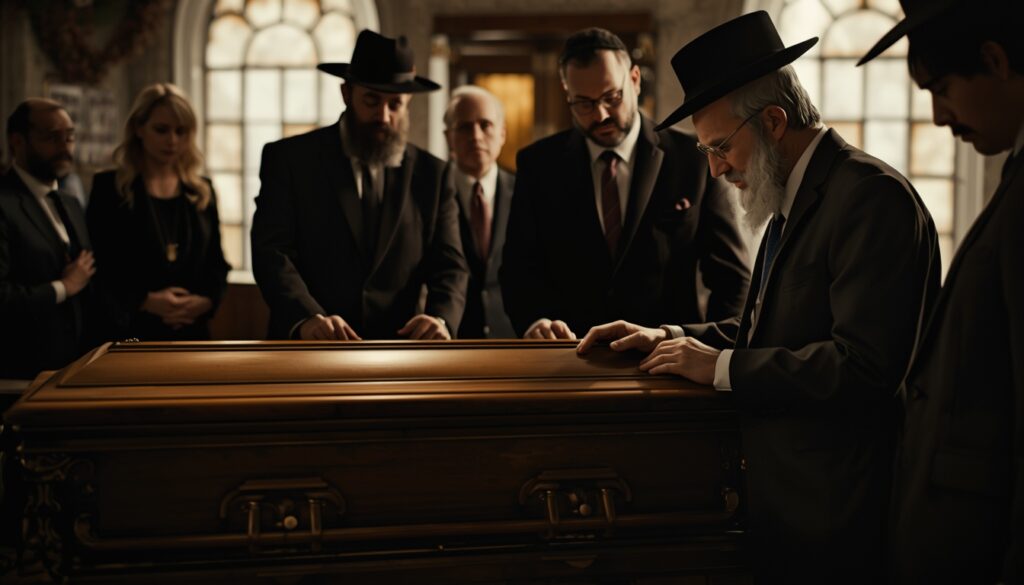
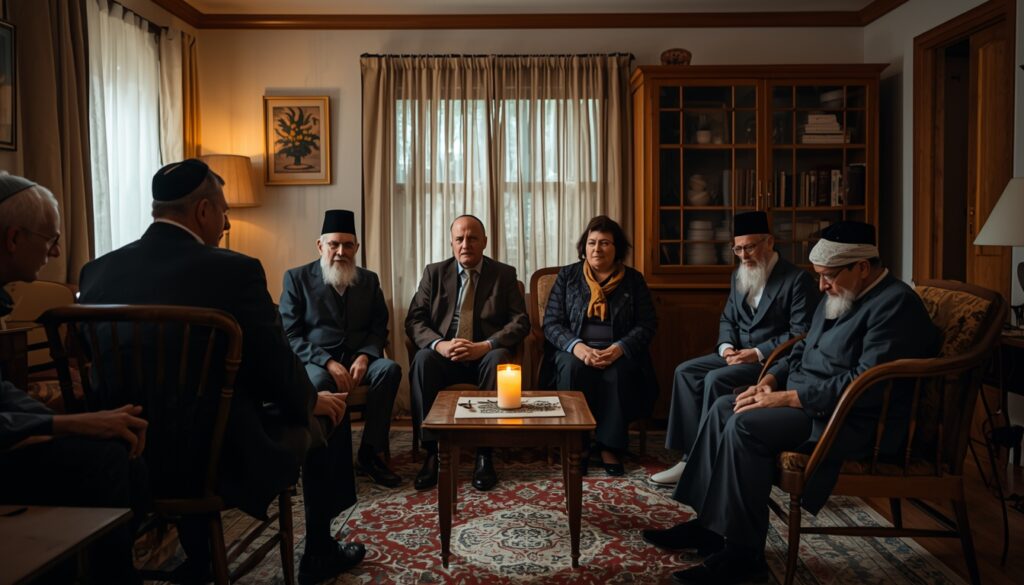
Perhaps the most significant difference in traditional Jewish funerals, as compared to funerals of other faiths, occurs in the aftermath of the funeral itself. Those following Jewish tradition typically observe a period following the funeral called a Shiva. That word, literally, means “seven,” and it represents the number of days that Jewish family is to spend in a formal state of mourning. Members of the deceased family – basically, those who served as Onen – are expected to remain at home (in many cases they all gather in one home for this period rather than returning to their private homes) and reflect upon the life and spirit of the deceased. (There are, of course, many very specific guidelines for how this reflection should take place. Often a Rabbi is called to assist the family in honoring the Shiva to its fullest.)
The Shiva period is more elaborately observed than many not part of the Jewish culture might anticipate. In general, the family, literally, is not expected to venture outdoors during this period, and other members of the Jewish community who are acquainted with the deceased are expected to serve the family’s needs regarding food and other staples of life. Typically, a Rabbi and other members of a temple will appear at the family’s home three times a day for services that specifically invoke the memory of the deceased and prayerfully address the needs of the immediate family.
As we say, proper discussion of all that is involved in a traditional Jewish Funeral would require many more words – volumes of words, in fact. But we believe this is a good introduction into the overall spirit that typically prevails as those of the Jewish faith mourn the deceased among their family and friends.