
You will often hear and read that, in today’s world, there is no such thing as a traditional funeral. That is well intended, but it is baloney. What those who say there is no such thing as a traditional funeral are trying to say is that consumers should not be tricked by funeral home sales people into paying for services they do not want or need simply because the funeral home’s marketing department (usually, these days, a sophisticated corporate operation run from big city offices by highly skilled and trained advertising and marketing experts) packages them as part of “traditional” funeral.
The warnings against traditional funerals are, as we say, well intended. But they can also be confusing. Because, fact is, most people and families do want a traditional funeral – but they do not relish the idea of wasting money.
So to help with all this, we have compiled this consumer guide to the traditional funeral. We hope those who are working with funeral homes can use this to make sure they get exactly the services and goods they need and desire at the most reasonable price the memorial industry market can offer.
Preparation of the Body
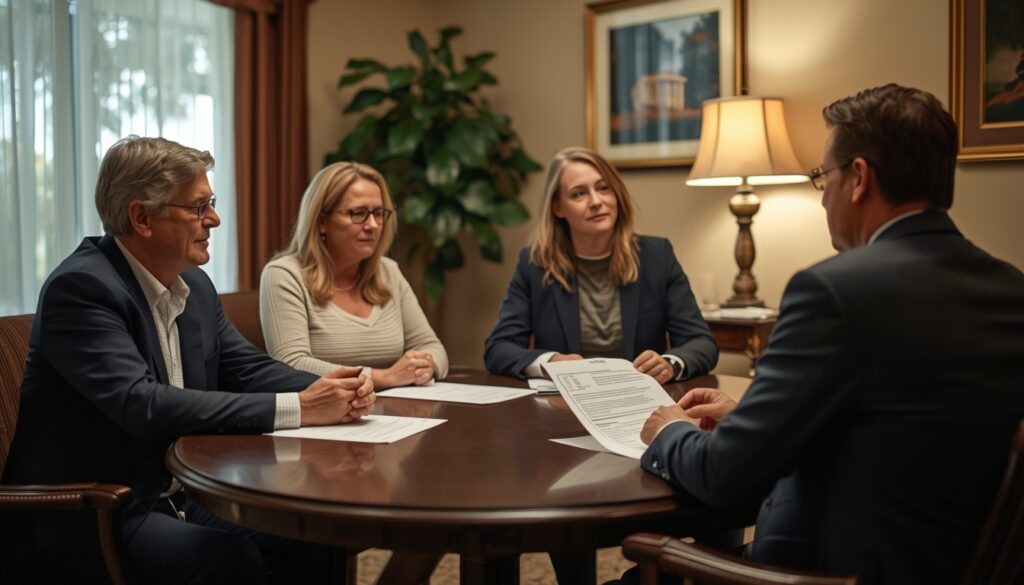
The first step in any traditional funeral is the preparation of the body. Many funeral directors and sales people for funeral homes will say that embalming is a necessary part of this step. The fact is, embalming is a relatively expensive option. Several frightening books that graphically describe just what an embalmer does to a body have made this process somewhat controversial. Many people now say, explicitly in their wills that they do not wish their body to be embalmed, in fact. Before choosing this option, families should realize that – except in the case of severe disfigurement – bodies can be preserved and prepared in a dignified manner without the use of embalming processes. Embalming will give the deceased a more polished, theatrical look during the memorial ceremony, but, for many in attendance, an un-embalmed body will look no less impressive. Probably the least expensive choice for preparation of a body is to simply elect to have a “closed casket” funeral. Because many mourners need a physical presence of a person in order to feel they have properly paid their last respects, this may not be an ideal solution for all parties, but, nevertheless, it is an option worth considering for those who are concerned about spending the least amount on a funeral.
Visitation
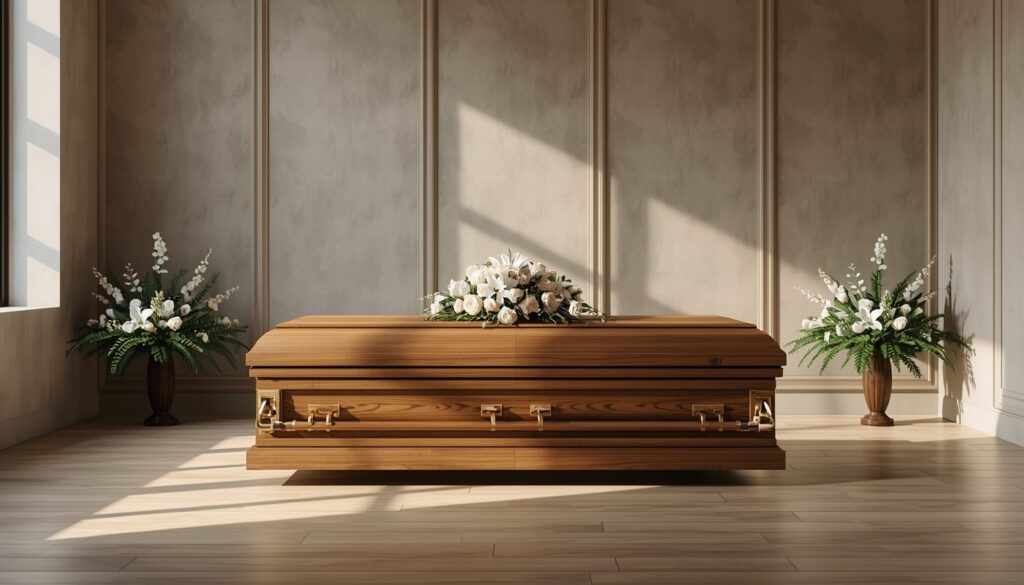
The visitation service is typically offered as a standard part of most “traditional funeral” plans. In short, a visitation (also called a wake), is a period in which family and friends can parade past the deceased to pay their final respects. The visitation, while often very important for mourners, is usually an optional part of the traditional funeral. And, contrary to what some believe, there is no informal cultural rule that requires the visitation be conducted on a different day, and in a different location from the funeral ceremony itself. Such an arrangement is strictly a matter of preference for the family members who are tasked with organizing a funeral ceremony.
While some visitation periods begin two or three days before a formal memorial ceremony and last until the very hour when a body is to be moved to another location, many beautiful funerals include a relatively brief visitation period just a half hour before the formal ceremony. In these cases, visitors who arrive a little early for the ceremony have opportunity to spend private time before the decease’s remains.
Though funeral home sales people may be inclined to recommend a longer, and more complicated, visitation period (at a higher cost, of course), consumers will do well to understand that a short and simple visitation period is quite acceptable, and common, as well.
Funeral Ceremony
It is important for family members to realize that the formal ceremony part of a funeral need not be long and sophisticated. Families who want help organizing a meaningful service can also review A Planning Guide For A Memorial Service. Professional clergy are not required, and a funeral home’s expensive chapel need not necessarily be employed. Consumer advocates advice their clients to research the cost of transporting a body prepared at a funeral home to another venue that may be special (or just less expensive) for the deceased’s family. Often the price is less, and the ceremony much more meaningful than it might otherwise be. Though funeral homes are, indeed, equipped to provide a very sophisticated, stylish experience for those who attend the funeral ceremony, they may not always be the best choice for a family.
Burial Ceremony
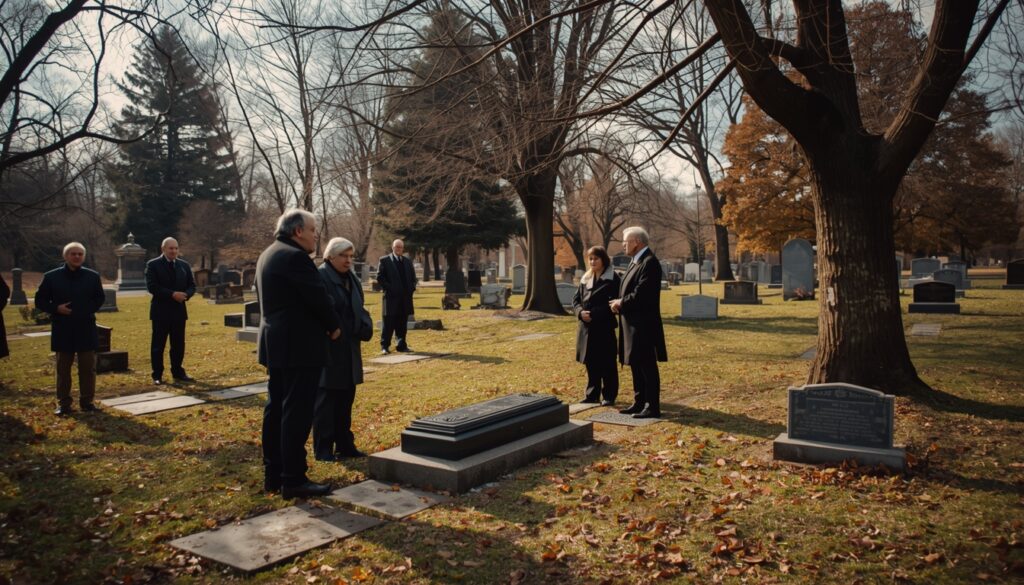
The burial ceremony is an optional part of any traditional funeral. Families considering alternatives to ground burial may also want to explore Mausoleum Niches when planning a final resting place. If hiring a host of limousines and paying for police escort for a funeral party will be too expensive for a family’s tastes, the family should feel no guilt at a decision to forgo this option. Many families choose to make their way in private cars to a very sparsely attended ceremony just before cemetery personnel close a grave. Families also often choose personalized Grave Markers, Headstones, or other Cemetery Products to create a lasting tribute at the burial site. This is an interely appropriate option, and families should not allow a funeral home or cemetery sales representative to attempt to shame them into paying for a larger, more complicated burial ceremony. (Little known fact: the makeshift shelters that many cemeteries employ for graveside burial ceremonies are usually optional. If cemetery are not required to raise and then tear down those structures, the overall price of the funeral will often be much less.)