
Caskets these days account for a huge part of the overall price of a loved one’s memorial service. Some industry statistics say up to half of the cost of a funeral can be attributed to a casket and, if the average funeral costs $6,000 – $10,000, that can mean that an average casket price would be up to $5,000. For families also planning burial arrangements, see our guide on How To Buy a Cemetery Plot to make informed choices and avoid extra costs, and explore Cemetery Products that can help personalize your loved one’s resting place.
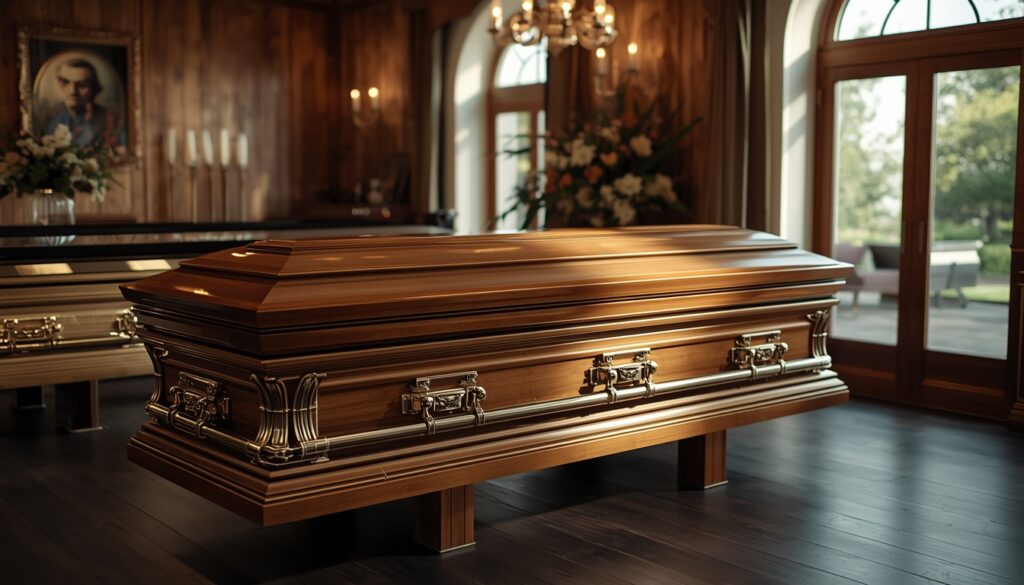
While that figure is likely inflated (reliable statistics regarding the price of a memorial service are hard to come by because parties that collect and publish such data tend to have political – lobbying — purposes behind their activity) it is certainly indisputable that caskets today are much more expensive than they were in the days of yesteryear when families would often hand craft their own caskets, sometimes with inexpensive plywood.
So, saving just 10 percent on the price of a casket can often shave hundreds of dollars from the overall cost of a funeral, and families who have lost a loved one are well served by anything that can save them money in the midst of their grief. With that in mind, this article aims to outline for consumers an important issue in the “death care” industry that certainly affects the price of caskets in today’s market. If you plan to visit the cemetery or arrange a burial, be sure to review our guide on Cemetery Etiquette to ensure a respectful experience.
The Big Three Companies
While dozens (maybe hundreds) of companies manufacture caskets in the United States, the industry is dominated by the three largest manufacturers: Batesville Casket Company, Matthews Casket Company, and Aurora Casket Company. These three companies have been in business for decades building caskets and selling them to funeral homes across America.
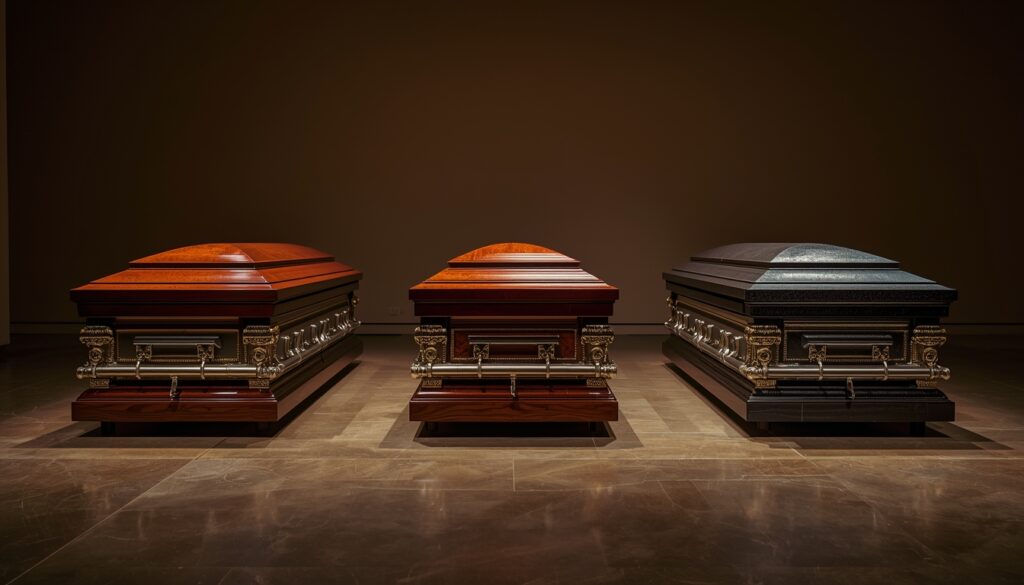
For much of their existence, these company’s practices were uncontroversial and simple. When a family was in need of a casket, the local funeral home was the only choice for a retail outlet. So, funeral directors simply put the three companies in competition with each other to see which could meet their clients’ needs in the best, least expensive manner. And the competition, ostensibly, kept prices within reasonable levels for customers.
But in about the 1960’s, consumers began their organized objections to what they said were abusive, monopolistic, price-gouging practices of funeral homes, and federal rules eventually came into effect that were designed to inject even more competition into the industry.
The rules, specifically, prohibited funeral homes from forcing their customers to buy caskets only from them. The Federal Funeral Rule explicitly gives funeral home clients the legal right to require that a casket purchased from a third party be used in a their loved one’s funeral. Under the law, which has been in affect since the 1980’s, funeral directors may not legally prohibit, or even discourage, their customers from shopping elsewhere for a casket.
This rule opened the American casket market to many new casket companies that were eager to begin selling their wares to retailers that were not funeral homes. Because funeral homes had historically relied upon large profits from casket sales to subsidize the less profitable parts of their business, the non-funeral home retailers – not saddled with all the overhead costs of a funeral home – could charge much lower prices for their caskets.
And, while that created a problem for funeral homes, it also led to lower overall costs for memorial services for consumers. And, in an economy that generally relies upon free and fair competition for its smooth operation, lawmakers and other experts saw this change as a good thing. Funeral homes however, saw the matter quite differently. And they fought back through their lobbyists and friendly legislators.
And the “big three” casket makers suddenly found themselves as pawns in this battle.
What Competitors of The Big Three Casket Companies Allege
The new manufacturers and retailers who were spawned into business by The Funeral Rule have never had an easy time breaking into the industry that had long been thoroughly controlled by funeral homes. Lawsuits over traditional funeral home policies and practices began almost immediately after the Funeral Rule became law and they continue today. Residents of Louisiana, for example, only recently have won the legal right to exercise their options under federal law. Before 2012, funeral home customers who brought their own casket to a funeral faced fines and even jail time under a state law which has recently been declared unconstitutional by Federal court of appeals. Funeral consumer groups report that conditions are much more favorable for consumers in all other states, but they warn that remnants of a political system that allowed funeral homes to be the exclusive, monopolistic seller of caskets remain in place in nearly every state. Constant vigilance is required to keep those remnants at bay, they say.

The new manufacturers and their retail customers have long alleged that funeral homes of America have combined their financial muscle against them unfairly in order to maintain their traditional business models. The new companies complain that funeral homes have maintained their strong arm on the industry by simply refusing, as a group, to patronize the many new casket manufacturers, no matter how low their prices may be. And, in exchange for this “loyalty,” the Big Three have agreed, the new retailers say, to not sell to any non-funeral home retail outlet, no matter what price is offered.
Students of anti-trust law will understand that prosecuting these serious allegations requires a burden of proof that is hard to meet: the new companies must be able to present evidence to a court that the Big Three companies and their funeral home customers have very explicitly agreed among themselves to these monopolistic tactics. And such evidence, at least as of this writing, has not yet been forthcoming to any court’s satisfaction.
But these facts do remain that are important to consumers: to date, the Big Three sell their caskets to very few retailers that are not funeral homes. And funeral homes, typically, purchase their caskets only from the Big Three.
Whether these facts can be judged to signal illegal collusion is a debate that will rage in America’s court houses for years to come. But the bottom line for consumers is this: to get the best price on a casket you may be needing upon a death in your family, it’s best to shop around. Chances are strong that the best deal will come from a manufacturer not among the “big three,” and a retailer that is not your funeral home.